Blog
Product updates, guides, and engineering notes from the team.
Synthetic Voice Disclosure: A Practical Publishing Checklist
Decide when and how to disclose synthetic narration, document consent and provenance, follow platform controls, and avoid misleading voice use.
Accessible Audio Content: A Practical Captions and Transcript Guide
Plan captions, transcripts, visual descriptions, playback controls, and audio QA from the start so podcasts, videos, and narration reach more people.
GPT-5.6 Sol '50% Off' Is a Gateway Promo, Not an OpenAI List-Price Cut
A Hacker News headline said GPT-5.6 Sol was cut 50%. OpenAI's list price did not move. Here is what actually changed on gateways, and what did not.
Speko Launches as an OpenRouter for Voice AI. What Changes for Voice Stacks
Speko, a YC S26 company, routes STT, LLM, and TTS from published language-specific benchmarks. Here is what that layer is — and is not — for people following GPT-Live-1.

How to Write E-Learning Narration That Helps People Learn
Design e-learning narration around learner actions, clear explanations, useful pauses, accessibility, and a review workflow—not slide reading.

Podcast Intro Script Templates That Sound Like Your Show
Write a concise podcast intro with a clear promise, host identity, episode context, music cues, and adaptable templates for solo and interview shows.
How to Write a YouTube Voiceover Script That Matches the Edit
Plan a YouTube voiceover around visuals, timing, captions, and retakes with a scene-by-scene script workflow that survives the final edit.
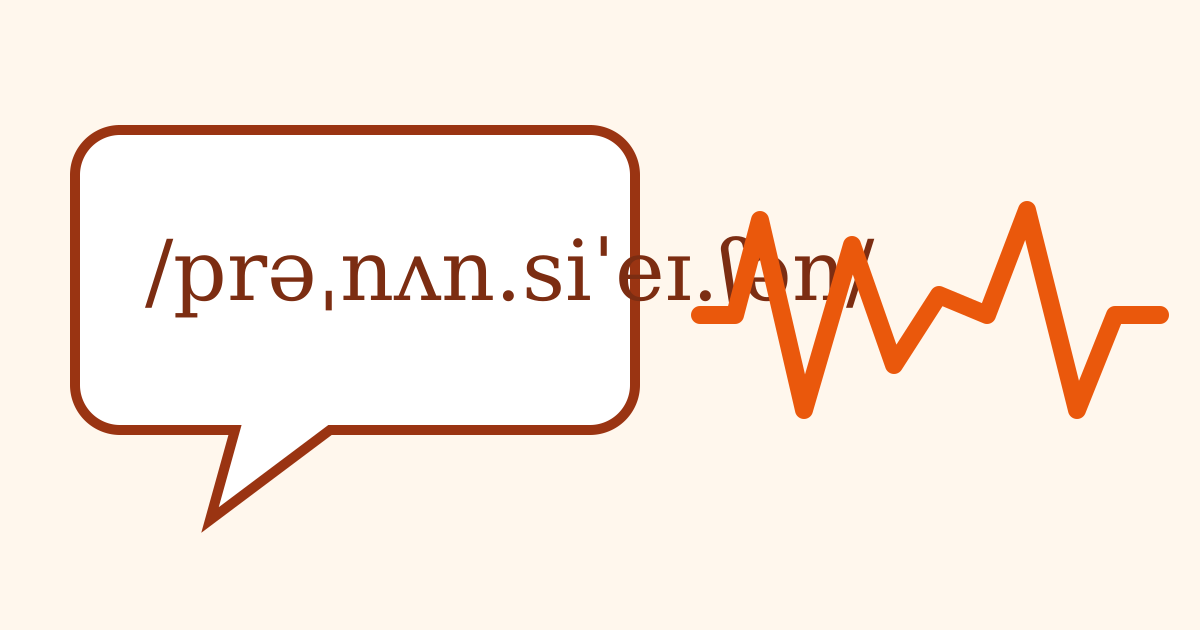
Text-to-Speech Pronunciation Guide: Fix Names, Acronyms, and Numbers
A practical TTS pronunciation workflow for names, acronyms, homographs, dates, and technical terms—without breaking the rest of your script.
Voiceover Script Word Count: Estimate Any Video or Audio Length
Estimate voiceover duration from word count, choose a realistic speaking pace, and plan pauses, retakes, and visual timing without guesswork.
How to Format a Text-to-Speech Script for Natural Narration
Turn ordinary copy into a clean TTS script with better pauses, pronunciation, sentence rhythm, and a repeatable listening-based editing workflow.
What Is GPT-Live-1? OpenAI's Full-Duplex Voice Model Explained
GPT-Live-1 is OpenAI's new voice model that listens and speaks at the same time. Learn what full-duplex means, how it compares, and who can use it.
 Ethan Park